Have you ever been to the Chianti Classico territories? Where is the best place to have a wine tasting in Chianti? Which wineries to visit in Tuscany and specifically in the Chianti Classico area?
In this article we answer all these questions and more.
In fact, before we take a closer look at which wineries you can find in Chianti Classico, we will tell you more about this wonderful wine, how its production takes place, how to best taste it and what is the history of the very famous symbol of the black rooster.
If you already know the part related to its production and history, you can skip directly to the section dedicated to Chianti Classico wineries.
Let’s get started right away!
Chianti Classico production and winemaking
Chianti Classico DOCG is an important red wine from the Tuscan region and has an ancient history. In fact, it was the first wine in the world to have its own legally delimited production area.
This wine is produced in the Tuscan region between Florence and Siena. It consists of 70,000 hectares that include the entire municipalities of Castellina in Chianti, Gaiole in Chianti, Greve in Chianti, Radda in Chianti and partly those of Barberino Tavarnelle, Castelnuovo Berardenga, Poggibonsi and San Casciano in Val di Pesa.
Chianti Classico is a wine of great tradition and prestige, known for its structure and complexity.
The vineyards are cultivated using traditional and environmentally friendly methods to ensure the quality of the grapes and the health of the land.
What grapes are used for the production of Chianti Classico? Mainly we have Sangiovese, present in percentages that can range from 80 to 100 percent, with the addition of other varieties such as Canaiolo and Colorino, Cabernet Sauvignon and Merlot.
Its particular grape composition gives the wine a characteristic ruby red color and an intense, spicy aroma.
The best grapes are destined for Riserva from the beginning and are aged in small oak barrels that release their aromas to the wine.
The symbol of the Black Rooster – 300 years of history
In this paragraph we tell you the history of the Black Rooster symbol. For 300 years the black rooster has been the symbol of Chianti Classico.
When it is placed on the neck or on the label of a bottle, in fact, it allows to distinguish a wine really produced within the Chianti territory (a Chianti Classico wine) from those produced outside this territory in the rest of Tuscany, i.e. “Chianti” wines without the appellation “Classico ” and without the Black Rooster.
Are you familiar with the legend of the Black Rooster?
The story goes that in the medieval period, after years of bloody war between the Republic of Florence and the Republic of Siena for control of the Chianti territory, it was decided to end the war and determine the boundaries of the two republics through a special competition.
At an appointed day, at the first cockcrow, a horseman would gallop from their respective cities, and at the point where they would meet, the border would be drawn.
The Sienese chose a white rooster to start their knight, and in the days leading up to it they fed him at will. The Florentines, on the other hand, chose a black rooster that they placed in an uncomfortable cage and left it to fast for several days.
On the day of the challenge, the Florentines’ black rooster, by then exasperated by hunger and the uncomfortable cage sang long before dawn, and the knight was able to leave with a decisive advantage over the Sienese, whose rooster, well satiated and relaxed, woke up and sang long after the first light of dawn.
So it was that the horsemen met just a few kilometers from Siena, near Fonterutoli, in Castellina in Chianti, where the border between the two republics was set.
How to pair with Chianti Classico?
How to pair Chianti Classico? Medium-bodied Chianti Classico with low tannins is suitable for accompanying grilled red meats. More elaborate dishes, on the other hand, such as game or dishes containing aged cheeses, require the more structured Riserva.
Now that you know the history of Chianti Classico, how and where it is produced, and what foods to accompany it with, let’s see where you can enjoy a great glass of Chianti Classico by finding out which wineries you should miss in the Chianti Classico area.
We have identified 7 of them!
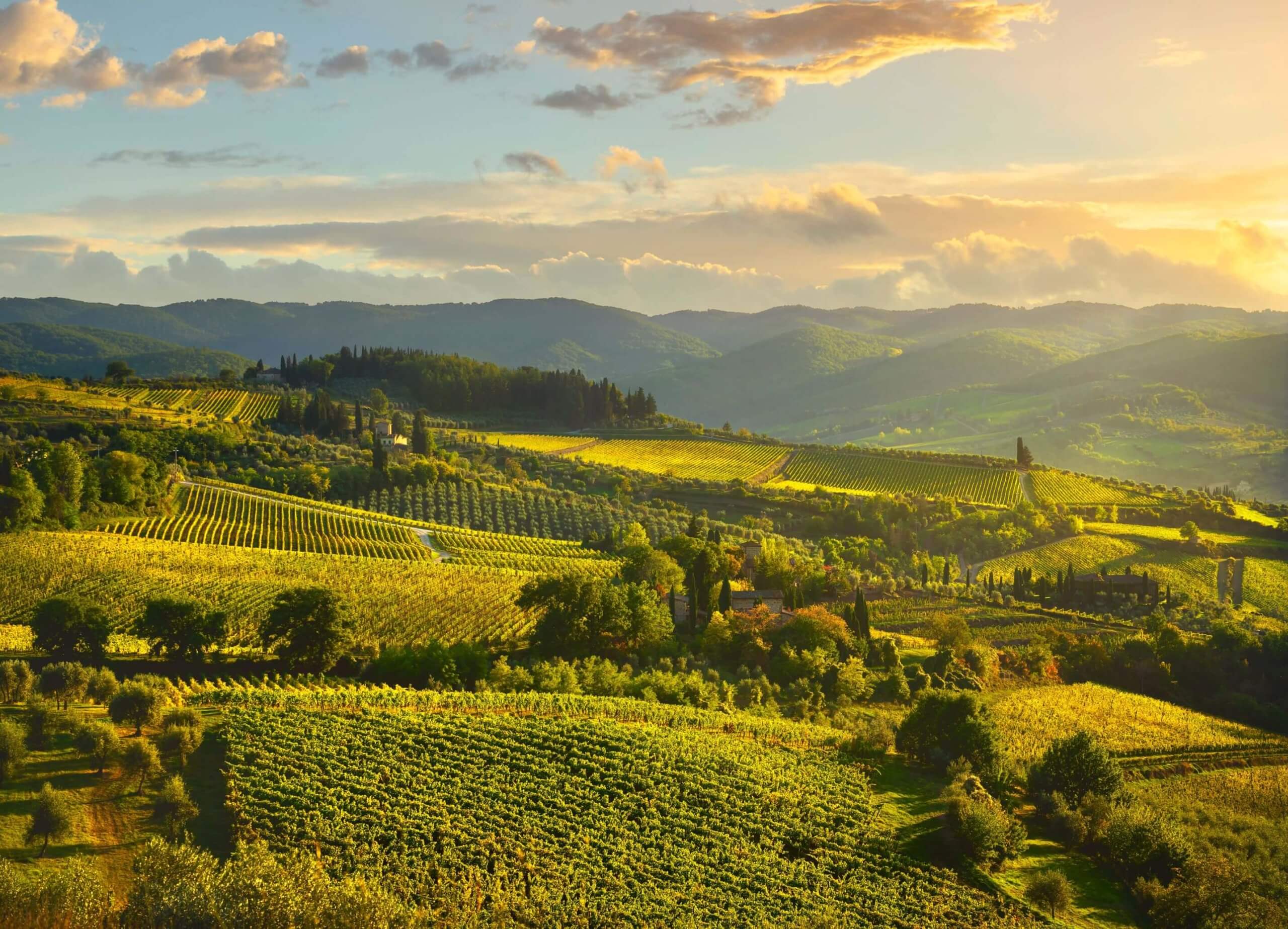
1. Torraccia di Presura – Villa Ulivello in Chianti
Founded in 1986 by Paolo Osti, Torraccia di Presura combines tradition and innovation with 35 hectares of vineyards and 8 hectares of olive groves. In 2019, the historic Villa Ulivello was restored and turned into an agritourism hub offering tastings, hospitality, restaurant services, and the sale of the company’s products.
The rooms, furnished in 19th-century style, offer a period atmosphere with all modern comforts. The winery offers wine trekking among olive groves and vineyards, paired with wines and typical Tuscan dishes.
Visit Torraccia di Presura – Villa Ulivello in Chianti
2. Carus Vini
Nestled among the hills of Chianti Classico, Carus Vini is located between San Casciano and Mercatale in Val di Pesa, in an area renowned for the production of excellent wines. Their vineyards, located at an altitude of 170-300 meters, ensure unique organoleptic complexity.
The estate spans a total of 26 hectares, of which: 13.5 dedicated to Chianti Classico DOCG, 5 to IGT Toscana, and 4.5 to olive groves. The winery combines tradition and technology with temperature-controlled stainless steel vats and French oak barriques or tonneaux. The estate is strongly committed to sustainability, with environmentally respectful production.
3. Castello di Querceto
Located in the northeast of Chianti Classico, in Greve in Chianti, Castello di Querceto is a historic Lombard residence that was once home to the Pitti and Canigiani families. With 65 hectares of vineyards and olive groves, the property was transformed into a farm at the beginning of the 20th century by Carlo François.
The castle boasts a cellar that holds historic bottles dating back to the early 20th century vintages. Visitors can explore the historic cellars, taste Chianti Classico and single-vineyard crus, as well as distillates and Vin Santo.
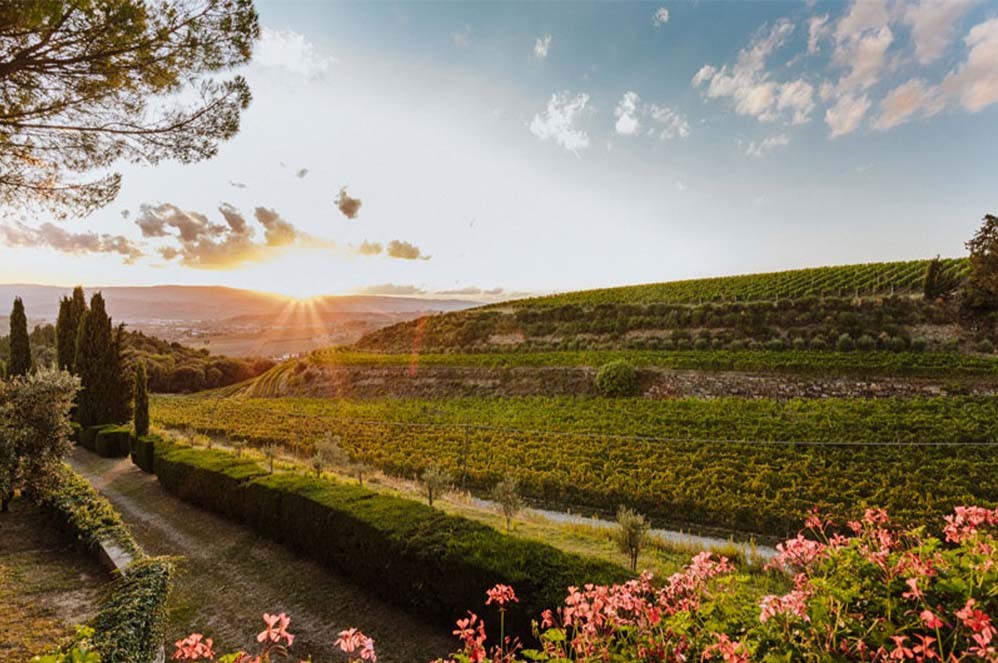
4. Tenuta degli Dei
Located in Panzano in Chianti, in the heart of the Conca d’Oro, Tenuta degli Dei is the wine project of Roberto and Tommaso Cavalli, a tribute to their love for the land and Tuscan tradition. Founded in the 1970s, the estate is named after “Didone degli Dei,” Roberto’s German Shepherd, symbolizing affection and inspiration.
The estate combines passion and dedication, producing premium wines through meticulous grape selection, respecting the tradition of this unique territory. An experience that celebrates excellence, family, and the bond with nature.
5. Villa Calcinaia – Conti Capponi
Villa Calcinaia, the beating heart of the Capponi family, traces its roots to a 1524 contract when Sebastiano del Caccia sold four estates to the Capponi. For generations, the family has renewed the life of the land, continuing the agricultural tradition with passion.
From the 30 hectares of vineyard, internationally known wines are produced, including a Chianti Classico that is the authentic expression of tradition and commitment. The wines of Villa Calcinaia embody continuous evolution and a deep bond with the territory.
Visit Villa Calcinaia-Conti Capponi
6. Cafaggio
Set in the beautiful “Conca d’Oro” of Panzano in Chianti, Cafaggio spans over 60 hectares, with 30 dedicated to specialized vineyards and 2 to olive groves. The estate, with medieval roots, is recognized as one of the most suitable areas for producing Chianti Classico. Cafaggio produces a selection of high-quality Chianti Classico wines, including Basilica Solatìo Gran Selezione and Basilica San Martino Riserva.
Its long history, dating back to 1408, intertwines with various owners until the Farkas family acquired it in the 1960s. Today, aiming to further elevate the quality of its wines, Cafaggio continues to focus on a meticulous approach in every phase of production.
7. Castelvecchi in Chianti
In the heart of Radda in Chianti, at 600 meters above sea level, Castelvecchi is a land where history and tradition intertwine with winemaking excellence. The hill names—Colle Petroso, Poggione, Madonnino—evoke the Middle Ages, while the Pieve di Santa Maria Novella echoes in the silence of the olive groves.
Casa Paladin has skillfully enhanced this territory with eleven cru spread across just 24 hectares, recovering with passion the genetic heritage of the ancient vines “Le Madri.” The Castelvecchi in Chianti cellar, the oldest still active in Tuscany, holds a precious Chianti, whose unique taste is the result of a deep connection with the landscape and time.
Didn’t find what you were looking for?